


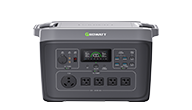
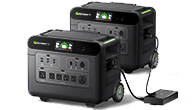
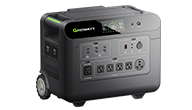


For homeowners across the United States, power outages can be more than a temporary inconvenience. Hurricanes, winter ice storms, wildfires, public safety power shutoffs, and extreme summer weather can interrupt grid service for hours or, in some cases, several days. When the power goes out, however, most households do not need to keep every appliance running. The priority is usually to maintain power for essential loads such as refrigerators, sump pumps, medical equipment, lighting, Wi-Fi routers, and well pumps.
This raises an important question: Is investing in essential load battery backup worth it for your household?
A dedicated essential-load backup system can provide emergency power at a lower upfront cost than a system designed to support the entire home. When paired with solar panels and properly sized residential energy storage, the battery can be recharged during daylight hours and provide power to critical circuits after sunset. This approach can help homeowners prepare for extended outages without investing in enough battery capacity to operate every high-power appliance in the house.

This article explains how essential-load solar-plus-battery systems work, which circuits to prioritize, how to size the system, and what US homeowners should consider before making an investment.
What Are Essential Loads for US Households During Blackouts?
Essential loads are the appliances and electrical devices a household considers necessary during a power outage. The exact list varies from home to home, but several common loads are frequently included in an essential load battery backup system:
- Refrigerators and freezers: Help preserve food and other temperature-sensitive items.
- Sump pumps: Help protect basements from water intrusion during heavy rain, snowmelt, or storms.
- LED lighting: Provides basic lighting for bedrooms, hallways, kitchens, and other areas.
- Internet equipment: Keeps routers and modems operating for communication and access to information.
- Well pumps: Provide water for homes that rely on private wells.
- Medical equipment: Devices such as CPAP machines or oxygen concentrators may be essential for some households.
By comparison, electric ovens, clothes dryers, electric water heaters, and central HVAC systems are often treated as non-essential or higher-priority loads depending on the household's needs. These appliances can consume substantial amounts of electricity and may require considerable battery capacity to operate for extended periods.
Instead of backing up every circuit, many residential systems use a dedicated critical-loads subpanel. This separates selected essential circuits from the rest of the home's electrical system, allowing available battery energy to focus on the loads that matter most during an outage.
When Does Essential-Load Battery Backup Make Practical Sense?
Battery backup is not necessary for every homeowner. Its value depends largely on local outage patterns, household needs, property risks, and the cost of installing and maintaining the system.
For households in areas that regularly experience extended outages from hurricanes, winter storms, wildfires, or other grid disruptions, essential load battery backup can provide meaningful resilience. Unlike fuel-powered generators, battery systems do not require gasoline or diesel during an outage and can operate quietly. When paired with solar, they may also be recharged during daylight hours, depending on system configuration and weather conditions.
Households that depend on electrically powered medical equipment may place a higher priority on backup power. For these homeowners, maintaining electricity for specific medical devices can be an important part of outage planning.
Homes with basements may also prioritize sump pumps. A power outage during heavy rain can prevent a sump pump from operating, potentially increasing the risk of water damage. Keeping the sump pump on a backed-up circuit can therefore be an important consideration for some properties.
On the other hand, homeowners who rarely experience outages or typically lose power for only a short period may find that a smaller battery or portable power solution meets their needs. A permanent residential energy storage system may make more sense when backup power is combined with other goals, such as increasing solar self-consumption or reducing grid electricity purchases.
How Essential-Load Battery Backup Works With Residential Solar
A typical solar-plus-storage system designed for essential loads combines rooftop solar panels, a hybrid inverter, battery storage, and a critical-loads subpanel.
Under normal grid-connected conditions, solar energy can supply household loads first. Depending on the system configuration and energy-management settings, excess solar generation can charge the battery or be exported to the grid.
When the utility grid goes down, the system detects the outage and isolates the backed-up circuits from the grid. The hybrid inverter can then supply electricity from the battery to the designated essential loads.
Solar panels can continue generating electricity during daylight hours, helping recharge the battery and potentially extend available backup energy when system conditions allow. Actual backup runtime will depend on solar production, weather, battery capacity, inverter limits, and household consumption.
Another advantage is scalability. Homeowners can start with enough battery capacity for their most important circuits and add compatible battery modules later if they need longer runtime or want to support additional loads. This can make residential energy storage more flexible for households that do not want to install a large battery bank from day one.
Selecting Battery Storage for Your Essential-Load Solar System
Battery capacity is one of the most important factors when designing reliable essential load battery backup. Homeowners need to consider both how much energy their critical loads consume and how much power those loads may require at the same time.
For example, a refrigerator may use relatively little energy over an entire day but require higher starting power when its compressor turns on. Sump pumps and well pumps can have similar startup characteristics. The inverter therefore needs to be capable of handling both normal operating loads and short-duration startup demands.
Low-voltage battery systems are commonly used in residential applications because their modular architecture can allow storage capacity to be expanded over time. For example, the Growatt ALP 5.0L LV-US battery can be configured with multiple modules to increase available storage capacity, subject to system design, compatible equipment, and applicable installation requirements.
The right number of battery modules depends on the home's critical-load profile. A household backing up a refrigerator, lighting, and networking equipment will have very different storage requirements from one that also needs to operate a sump pump, well pump, or medical equipment for multiple days.
Equipment should also be selected according to applicable safety standards, local electrical requirements, utility rules, and permitting requirements. Homeowners should verify current certifications and incentive eligibility for their specific project rather than assuming that every solar-storage product qualifies automatically.
Steps to Size Your Essential-Load Solar and Storage System
1. Calculate the Power Consumption of Critical Loads
Make a list of every essential device and record its rated wattage and expected daily runtime. Estimate daily watt-hour consumption and identify which loads may operate simultaneously.
For motor-driven equipment such as sump pumps, refrigerators, and well pumps, also check the manufacturer's startup or surge requirements. These short-duration demands can be important when selecting the inverter.
2. Determine Your Target Backup Runtime
Decide how long you want the system to operate without grid power. A 12- or 24-hour backup target requires significantly less battery capacity than a system designed to provide power for several days.
Consider the typical outage duration in your area as well as the types of weather events that may cause extended interruptions.
3. Match Inverter Capacity to Peak Loads
Battery capacity determines how long the system can run, while inverter power determines how much electrical load the system can support at one time.
Make sure the inverter can handle the combined operating load and startup demands of the essential circuits. Otherwise, the system may overload or disconnect when multiple high-demand appliances start at the same time.
4. Consider Local Solar Conditions
Solar production varies significantly by location, season, roof orientation, shading, and weather. Homes in regions with frequent cloudy conditions may need a larger solar array, additional battery capacity, or a more conservative backup strategy for extended outages.
A qualified installer can model expected solar production and battery performance based on the property's specific conditions.
Common Mistakes When Building Essential-Load Backup Systems
Several planning mistakes can reduce the effectiveness of an essential load battery backup system:
- Putting too many high-power appliances on the critical-load panel. Large loads can quickly consume available battery energy.
- Ignoring startup power. Motors and compressors may require significantly more power when starting than during normal operation.
- Sizing only for day-one capacity. Consider how your household's electricity needs may change over time and whether the battery system can be expanded.
- Failing to separate essential and non-essential circuits. A properly designed critical-load panel helps direct limited backup energy where it is most useful.
- Overlooking maintenance and monitoring. Firmware updates, battery monitoring, and periodic system checks can help keep the system ready for an outage.
- Attempting electrical work without appropriate expertise. Battery systems and critical-load panels should be installed according to applicable electrical codes, permitting requirements, and manufacturer instructions.
Final Takeaway
So, is essential load battery backup worth it for your home? The answer depends on your local outage history, household priorities, property risks, medical or water needs, and available budget.
For many US homeowners, backing up essential circuits can provide a practical balance between outage resilience and system cost. Instead of installing enough battery capacity to power every appliance in the home, you can focus available energy on the circuits your household depends on most.
With properly sized residential energy storage, a suitable hybrid inverter, and a well-designed critical-loads subpanel, homeowners can keep refrigerators running, maintain basic lighting and communications, support well or sump pumps, and power other essential equipment during grid interruptions.
Before choosing hardware, work with a qualified local installer to review your electricity consumption, identify priority loads, evaluate local solar conditions, and check applicable utility, permitting, and incentive requirements. A system designed around your home's actual needs can provide useful backup capacity without requiring storage that you may rarely use.
For homeowners considering essential load battery backup, the goal is not necessarily to keep the entire house running exactly as it does under normal grid conditions. Instead, a properly planned system focuses limited battery energy on the appliances and circuits that matter most. When combined with appropriately sized residential energy storage and solar generation, this approach can provide a practical way to improve outage resilience while keeping system costs and battery capacity aligned with real household needs.

