


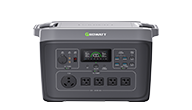
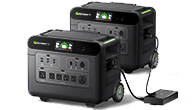
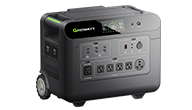


When you're shopping in the 8–10kW range for a hybrid solar inverter, you've already made the hard decisions: grid-tied with battery backup, split-phase 120/240V, serious solar input. What's left is a question that looks simple and isn't: is the extra 2kW worth it?
Here's the twist most comparison pages miss. Growatt's SPH 8000TL and SPH 10000TL are built on the same platform — same 15,000W solar input, same three MPPT trackers, same 48V battery architecture, same sub-10ms backup switching, same UL 1741 certification and 10-year warranty. The 8kW model isn't a stripped-down version. It's the same machine with a deliberately more conservative AC ceiling — and that difference changes which home each one fits.
What's Actually Different Between 8kW and 10kW
|
Specification |
||
|
AC output |
8,000W / 40A |
10,000W / 50A |
|
Solar input (PV) |
Up to 15,000W |
Up to 15,000W |
|
DC/AC ratio |
1.875 |
1.5 |
|
Battery charge/discharge |
190A continuous |
200A continuous |
|
Generator input |
Up to 8,000W |
Up to 10,000W |
|
Parallel expansion |
6 units = 48kW |
6 units = 60kW |
|
Backup transfer time |
<10ms |
<10ms |
|
Battery voltage |
48V (40–60V) |
48V (40–60V) |
|
Certifications |
UL 1741 (SA/SB), IEEE 1547 |
UL 1741 (SA/SB), IEEE 1547 |
|
Weight / enclosure |
42.5kg, IP65 outdoor |
42.5kg, IP65 outdoor |
|
Warranty |
10 years |
10 years |
Everything that determines system design — panel array size, string configuration, battery voltage, mounting, permitting — is identical. You could install either model on the same roof with the same rack of 48V ALP batteries and swap them without touching anything else.
So the decision comes down to three questions about your loads, your climate, and your budget.
Question 1: What's Your Peak Simultaneous Load?
This is the whole decision, and it takes ten minutes with a notepad.
Walk through your home and list everything that could realistically run at the same time during an outage. Not everything you own — everything that overlaps. Then total the watts:
|
Load |
Typical Watts |
|
Refrigerator (compressor running) |
150–200 |
|
LED lighting, whole house |
100–300 |
|
Wi-Fi + electronics |
100–200 |
|
Well pump (startup spike 2–3×) |
750–2,000 |
|
Mini-split or window AC |
500–1,500 |
|
Microwave |
1,000–1,500 |
|
Electric range (one burner) |
1,200–2,000 |
|
Central AC compressor |
3,000–5,000 |
|
EV charger (Level 2) |
7,000+ |
Under 8,000W of realistic overlap? The 8kW model covers it. That describes most homes up to about 2,500 sq ft that back up essentials plus moderate comfort loads — fridge, pumps, lights, electronics, a mini-split, cooking circuits used one at a time.
Over 8,000W on a regular basis? Step up to 10kW. Central AC running while the well pump starts while dinner is cooking — that stack blows past 8kW, and an undersized inverter trips exactly when you need it most.
One nuance: both inverters tolerate 1.5× rated power surges for 5 seconds, so a brief motor startup can exceed the rating. But sustained loads must stay under the ceiling. If your overlap math lands at 8,500W, don't count on the surge headroom — go 10kW.
Question 2: Does Your Climate Argue for Bigger AC Output?
The two models harvest identical solar energy — the 8kW actually runs a higher DC/AC ratio (1.875 vs 1.5), meaning its 15kW array pushes proportionally harder against its AC ceiling. In practical terms:
- Sunny climates with steady daily loads: the 8kW's AC ceiling is rarely a constraint. Solar comes in, batteries charge, loads run — all under 8kW. The extra PV headroom just means faster battery recovery after cloudy stretches.
- Hot climates with heavy summer AC: cooling loads stack in the afternoon exactly when solar peaks, which sounds ideal — until a 4-ton central compressor (5kW+) plus everything else pushes past 8kW. In Texas, Florida, or Arizona summers with central AC, the 10kW's 50A output earns its keep.
- Outage-prone regions with long storms: both units accept generator input, but the 10kW accepts up to 10,000W of it. If your backup plan leans on a large standby generator recharging a big battery bank fast, 10kW closes the loop quicker.
Question 3: What Would You Do With the Price Difference?
This is the argument for the 8kW that most comparisons skip: the inverter budget you don't spend can become battery capacity you actually use.
An 8kW unit typically costs several hundred dollars less than the 10kW (see current pricing on the 8kW product page). Applied to storage at roughly $1,800 per 5kWh module, that gap can translate into one to two extra battery modules — 5 to 10 additional kWh of backup runtime.
Which matters more? Depends on your failure mode:
- If your outages are short and frequent (grid blips, rolling blackouts), AC headroom matters less than you think — you're bridging hours, not days. The 8kW + more batteries handles this well.
- If your outages are long and seasonal (hurricane weeks, ice storms), runtime per day matters, but so does surviving heavy loads throughout. Whole-home backup with HVAC leans 10kW.
- If you're off-grid or backup is daily life, both matter — and that's usually where the 10kW + full battery bank wins.
For a deeper dive on the battery side of this math, see our guide on how many 48V LiFePO4 batteries a home needs.
The Parallel Path: Why "Start Small" Is Safer Here
There's a third option most buyers don't consider: start with one 8kW unit and add a second later. Both SPH models support up to 6 units in parallel — the 8kW scales to 48kW total, the 10kW to 60kW.
This matters because your load profile grows predictably: EV charger this year, heat pump next year, workshop after that. A parallel-ready platform means today's inverter isn't tomorrow's bottleneck. The honest caveat: parallel expansion still requires the additional units, wiring, and commissioning — so if you know your loads exceed 8kW now, buy the 10kW now rather than planning to grow into it.
Quick Decision Framework
Choose the 8kW if:
- Your peak simultaneous load stays under 8,000W
- You back up essentials + moderate comfort loads, not central AC plus everything else
- You'd rather convert the price difference into extra battery runtime
- You want maximum solar harvest per dollar (DC/AC 1.875)
Choose the 10kW if:
- Central AC, electric range, or EV charging overlap with your backup loads
- Your outage plan includes a large generator recharging a big battery bank
- You're designing whole-home backup for a larger home (2,500+ sq ft)
- You'd rather buy headroom once than plan a parallel expansion later
Both routes start at the Growatt hybrid inverter collection, and neither is a compromise — they're the same platform aimed at two different homes.
Frequently Asked Questions
Is an 8kW inverter enough to run a house? For most homes up to ~2,500 sq ft, yes — if the backup scope is essentials plus moderate comfort loads. The constraint isn't the house size, it's the overlap: add up what runs simultaneously. Under 8,000W, the 8kW unit handles it including 240V loads.
Can I upgrade from 8kW to 10kW later? Not by swapping firmware — they're separate units. You either replace the inverter or add a second unit in parallel (both SPH models support up to 6 in parallel, so an 8kW system can scale to 48kW). If your loads are borderline 8kW today and growing, buy the 10kW now.
Do both models use the same batteries and solar panels? Yes — identical platform. Same 15,000W PV input, same three MPPT trackers, same 48V battery architecture, same mounting. That's why the choice is purely about AC output and budget.
Which one is more efficient? Identical: 98.1% peak efficiency, 97% CEC weighted, ≥99.9% MPPT tracking on both. The 8kW's higher DC/AC ratio (1.875) means it clips less solar on bright days relative to its size.
Does the 8kW inverter support a generator? Yes — dual AC inputs with up to 8,000W of generator input (10,000W on the 10kW). Either model can recharge its battery bank from a generator during multi-day outages.
The bottom line: count your overlap, not your square footage. Under 8kW of realistic simultaneous load, take the 8kW and bank the difference in batteries. Above it — or planning heavy 240V loads on backup — the 10kW is the tool. Compare both models side by side or reach out for a free sizing consult with your load list.

