




For US homeowners building an off-grid house, cabin, or remote homestead, choosing the right stationary LiFePO4 battery is one of the most important decisions in the entire solar project. Lithium iron phosphate (LiFePO4) batteries have become increasingly popular for residential energy storage because they offer long cycle life, strong thermal stability, and relatively low maintenance compared with traditional lead-acid batteries.
However, buyers often face an important choice: Should they use a high-voltage battery system or a low-voltage 48V-class battery bank?
Both architectures can support off-grid solar applications, but they are designed around different system requirements, power levels, installation conditions, and equipment ecosystems. Understanding the differences can help homeowners avoid costly compatibility issues between the solar inverter and battery storage.

What Are Low-Voltage and High-Voltage LiFePO4 Batteries for Off-Grid Solar?
Low-voltage residential LiFePO4 battery systems commonly operate around 48V, which has long been widely used in off-grid solar applications. A 48V battery system is compatible with many residential off-grid inverters, and installers are generally familiar with its wiring, protection, and battery-management requirements.
Another advantage is modularity. Many low-voltage battery systems use individual modules that can be connected together to increase total storage capacity. This allows homeowners to start with a smaller battery bank and expand it later as their energy needs grow, provided the inverter and battery manufacturer support the intended configuration.
High-voltage battery systems typically operate at substantially higher DC voltages, often ranging from roughly 150V to 400V or more depending on the system architecture. At the same power level, higher voltage means lower current, which can reduce resistive losses and potentially allow smaller conductors and different system designs.
High-voltage storage can be suitable for larger solar-plus-storage installations, but it also requires compatible high-voltage inverters, specialized equipment, and installation procedures appropriate for the system voltage.
For many small-to-medium off-grid homes, a low-voltage 48V battery system can provide a practical combination of compatibility, modularity, and straightforward system design.
Low-Voltage 48V LiFePO4 Batteries: Benefits for Off-Grid Houses
One of the main advantages of a low-voltage 48V battery is its broad compatibility with off-grid solar equipment. Many residential off-grid inverters are designed to work with batteries in this voltage class, giving homeowners and installers more equipment options.
Installers are also generally familiar with 48V battery systems and the associated DC protection, wiring, battery management, and commissioning procedures. This can be particularly useful for remote properties where access to specialized service technicians may be limited.
Another major benefit is phased expansion. Instead of purchasing the maximum amount of storage at the beginning, homeowners can install a smaller battery bank and add compatible modules later if their electricity consumption increases.
This is especially useful for off-grid properties that start with basic electrical loads but gradually add appliances such as electric water heaters, well pumps, air conditioning, EV chargers, or workshop equipment.
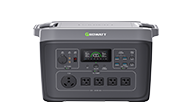
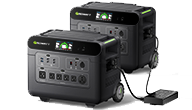
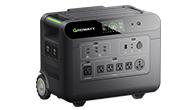
The Growatt ALP 5.0L LV-US is an example of a stationary LiFePO4 battery designed around a low-voltage architecture for residential solar-plus-storage applications. Its modular design allows multiple compatible modules to be configured together to increase total storage capacity, subject to the system's specified configuration and installation requirements.
A homeowner might begin with enough capacity to support essential loads such as lighting, refrigeration, communications equipment, and water pumps, then add additional modules as energy requirements grow.
The integrated battery management system (BMS) monitors key operating conditions and provides protective functions such as overcharge, over-discharge, and temperature protection. These features are particularly important for residential storage systems installed at remote properties.
For off-grid cabins and homesteads with moderate energy consumption, this modular approach can reduce the pressure to purchase a large battery bank before actual electricity usage is known.
High-Voltage LiFePO4 Batteries: When Do They Make Sense?
High-voltage LiFePO4 battery systems can be attractive for larger off-grid homes with higher continuous power requirements. Homes with substantial loads such as central air conditioning, electric cooking, large heat pumps, or workshop equipment may benefit from a high-voltage system architecture when the inverter and battery are designed to work together.
The primary electrical advantage is lower current at the same power level. Lower current can reduce resistive losses in the battery cables and may allow smaller conductors compared with an equivalent lower-voltage system, depending on the installation design.
This can become more relevant when the inverter and battery are located farther apart or when the system handles substantial power.
However, high-voltage storage also introduces additional considerations. The equipment is more specialized, which may limit installer availability in some rural areas. Installation, servicing, isolation, and protection procedures must be appropriate for the higher DC voltage.
Expansion can also depend heavily on the battery architecture. Some high-voltage systems are designed as integrated battery packs or require specific module configurations, so homeowners should confirm future expansion options before selecting the system.
Most importantly, high-voltage batteries cannot simply be connected to a conventional 48V off-grid inverter. The battery voltage range, BMS communication, charging requirements, and inverter compatibility must all match.
Low-Voltage vs. High-Voltage LiFePO4: Key Differences
Cost and Installation
For small and medium-sized off-grid projects, a 48V battery system may offer a simpler and more accessible installation path. Components and compatible inverters are widely available, and many residential solar contractors already have experience with this architecture.
High-voltage systems can require more specialized equipment and installation procedures. Whether they reduce overall project costs depends on system size, cable distances, equipment selection, and local labor requirements.
Safety and Serviceability
Both low-voltage and high-voltage LiFePO4 battery systems require appropriate protection, installation practices, and safety procedures.
A 48V system operates at a lower DC voltage than a high-voltage battery system, which can simplify certain service procedures. However, a low-voltage battery can still deliver very high fault current, so proper overcurrent protection, disconnects, wiring, and installation practices remain essential.
High-voltage systems require additional attention to electrical isolation, protection, labeling, and servicing procedures appropriate to their operating voltage.
Scalability
Low-voltage modular batteries can provide a straightforward path for incremental expansion. A compatible 48V battery system may allow homeowners to add modules as their energy requirements increase, subject to manufacturer limits.
High-voltage systems can also be scalable, but expansion options vary considerably between products. Always check the maximum battery capacity, module quantity, communication requirements, and approved configurations before purchase.
Important US Code and Safety Considerations
Off-grid does not mean exempt from electrical safety requirements. Stationary battery installations in the US may be subject to applicable NEC requirements, local permitting rules, fire-safety requirements, and other regulations depending on the project location and system design.
Both low-voltage and high-voltage systems require appropriate disconnects, overcurrent protection, listed equipment, grounding, wiring, and installation clearances.
High-voltage systems require additional precautions because of their higher DC operating voltage. Homeowners should use installers who understand the specific battery and inverter architecture being installed.
Before purchasing a LiFePO4 battery, confirm that the battery and inverter are compatible and that the equipment carries the certifications or listings required for the intended application and location.
How to Choose Between Low-Voltage and High-Voltage LiFePO4
Start with your home's load profile.
If your off-grid property is a small cabin with lighting, refrigeration, communications equipment, and basic appliances, a 48V battery system may provide a practical solution with broad inverter compatibility and flexible expansion options.
If you are designing a larger off-grid home with substantial continuous loads and a high-power solar array, a high-voltage LiFePO4 battery system may be worth evaluating. Its lower-current architecture can offer electrical efficiency advantages at higher power levels, but the overall system needs to be designed as an integrated package.
Future expansion should also influence your decision. If you expect electricity consumption to increase over time, look for a battery architecture that clearly supports additional capacity.
Installer availability is another important consideration for remote properties. A system that can be easily serviced by qualified professionals in your area may be more practical than one requiring specialized technicians from a distant location.
Finally, compare the complete system rather than battery voltage alone. Consider the inverter, battery capacity, solar array, wiring distance, installation cost, backup requirements, and long-term expansion plans.
Final Thoughts
A stationary LiFePO4 battery can provide a strong foundation for residential off-grid energy storage, but low-voltage and high-voltage architectures serve different system requirements.
For many small and medium-sized US cabins, homesteads, and remote homes, a modular 48V battery system offers broad compatibility, flexible capacity expansion, and a familiar installation approach. High-voltage storage can be considered for larger systems with higher power requirements where its lower-current architecture and system efficiency advantages may become more relevant.
The right choice ultimately depends on your home's load profile, solar array, inverter compatibility, installation conditions, budget, and future energy needs.
Before purchasing a LiFePO4 battery, work with a qualified off-grid solar installer to evaluate your current and projected loads, confirm equipment compatibility, and review applicable local requirements. Choosing the battery architecture at the beginning of the project can help create an off-grid solar system that is easier to expand, maintain, and operate over the long term.

