


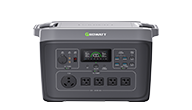
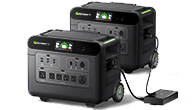
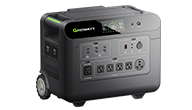


For US residential solar and energy storage systems, a 48V split-phase inverter can provide the 120/240V AC configuration commonly used in American homes while connecting low-voltage battery storage with solar generation and household loads. Compared with single-phase equipment, split-phase systems are better suited to homes that need to operate both 120V circuits and 240V loads such as well pumps, HVAC equipment, electric water heaters, and other high-power appliances.
However, choosing the right inverter involves more than looking at the power rating. Homeowners need to consider continuous and surge capacity, split phase inverter parallel capability, MPPT performance, battery compatibility, and applicable US certification and interconnection requirements.
This 48v split phase inverter buying guide explains the most important factors to evaluate before selecting equipment for a US residential solar-plus-storage system.

1. Choose the Right Inverter Capacity for Your Home
Inverter capacity is one of the first specifications homeowners should evaluate. A properly sized inverter needs to support the home's expected continuous loads while also handling short-duration startup demands.
Most inverters have both a continuous output rating and a surge or peak capability. Continuous power is used for everyday loads such as lighting, refrigerators, electronics, and other appliances. Surge capability becomes particularly important when starting motor-driven equipment.
Refrigerators, freezers, well pumps, air conditioners, and other motors can require substantially more power during startup than during normal operation. If the inverter cannot handle this temporary demand, it may enter an overload or protection state.
There is no single inverter size that is appropriate for every US home. A smaller home with carefully managed essential loads may work well with a lower-power system, while a larger home with HVAC equipment, pumps, workshops, or other heavy loads may require substantially more capacity.
Before purchasing a 48V split-phase inverter, perform a load assessment that considers:
- Total continuous household demand
- Loads expected to operate simultaneously
- Motor and compressor startup requirements
- 120V and 240V load distribution
- Essential backup loads
- Future appliance additions
Instead of simply choosing the largest inverter available, match the inverter to the actual load profile and leave reasonable capacity for future needs.
2. Look for Split Phase Inverter Parallel Capability
Long-term scalability is another important consideration in this 48v split phase inverter buying guide.
Residential energy needs can change over time. A homeowner may initially need enough power for basic household loads but later add an EV charger, larger HVAC equipment, workshop tools, additional battery storage, or other electrical loads.
This is where split phase inverter parallel capability can provide a major advantage.
Parallel-capable inverter systems allow multiple compatible units to operate together under an approved system configuration. Depending on the inverter design, parallel operation can increase total power capacity and may provide additional flexibility for system expansion.
However, homeowners should not assume that any two inverters can simply be connected in parallel. Parallel operation generally requires compatible models, appropriate communication, synchronized operation, correct phase configuration, and installation according to the manufacturer's instructions.
The complete electrical system may also need to be upgraded as inverter capacity increases. This can include battery capacity, conductors, overcurrent protection, disconnects, and distribution equipment.
The Growatt SPH 10000TL-HU-US (B), for example, supports parallel operation of compatible units, allowing system capacity to be expanded when the overall installation is designed for it. This can make it suitable for homeowners who want to begin with one inverter and expand later rather than replacing the original unit.
3. Evaluate MPPT Performance and Solar Input
Maximum Power Point Tracking, or MPPT, is another important factor when comparing solar inverters.
The MPPT controller continuously adjusts the operating point of the PV array to help extract available solar power as sunlight and operating conditions change. This is particularly useful when the solar array experiences changing irradiance throughout the day.
The number and configuration of MPPT trackers also matter.
A system with multiple independent MPPT inputs can be advantageous when the roof has different orientations, tilt angles, or partial shading conditions. Separate PV strings can potentially be connected to different trackers so that one array configuration has less influence on another.
However, more MPPT trackers do not automatically mean higher annual energy production. Actual performance depends on the PV array design, string configuration, shading, module characteristics, inverter operating range, and installation conditions.
When evaluating a 48V split-phase inverter, check:
- Maximum PV input power
- Maximum PV voltage
- MPPT voltage range
- Maximum input current
- Number of independent MPPT trackers
- Supported PV string configurations
The SPH 10000TL-HU-US (B) combines solar MPPT functionality with battery storage and split-phase AC output, allowing the PV array, battery bank, and household loads to be managed within one integrated system.
4. Verify 48V Battery Compatibility
A split-phase inverter may provide the correct AC output but still be unsuitable for a particular battery bank.
For 48V-class battery systems, check the inverter's supported battery voltage range and maximum charge and discharge current. The battery's own continuous and peak current ratings must also be sufficient for the expected inverter load.
Battery communication is another important factor. Many modern LiFePO4 batteries use CAN or RS485 communication to exchange information with the inverter. However, simply having the same communication interface does not guarantee compatibility. The communication protocol and supported battery models should be verified before installation.
For high-power systems, battery capacity is also important. A 10kW inverter connected to a small 48V battery bank may require more current than the battery can provide. The battery system therefore needs to be sized for both energy capacity and power output.
5. Understand UL 1741 and Other US Requirements
Certification is an essential part of selecting an inverter for a US residential installation.
UL 1741 is a key standard covering inverters, converters, controllers, and interconnection system equipment used with distributed energy resources. However, homeowners should not assume that a UL 1741 reference by itself automatically satisfies every local utility or AHJ requirement.
Depending on the application and jurisdiction, additional certification, testing, or grid-interconnection requirements may apply.
UL 1741 Supplement SA and Supplement SB address advanced grid-support and interconnection functions associated with different US requirements. IEEE 1547-2018 is also an important standard for the interconnection and interoperability of distributed energy resources.
The exact requirements depend on the utility, location, system configuration, and applicable rules at the time of installation.
Therefore, when evaluating a 48v split phase inverter buying guide, homeowners should verify the exact certification and listing information for the model they intend to install rather than relying on a generic "UL certified" statement.
The SPH 10000TL-HU-US (B) is designed for US residential applications and supports applicable UL 1741 SA/SB-related requirements. Installers should still confirm that the specific model and configuration meet the requirements of the local AHJ and utility.
6. Check 120/240V Split-Phase Output
For US homes, split-phase output is an important feature when the system needs to supply both standard 120V circuits and 240V equipment.
A split-phase inverter should be evaluated based on how it manages the two AC legs and the loads connected between them. This becomes particularly important for 240V appliances such as well pumps, HVAC systems, electric dryers, and certain workshop equipment.
Homeowners should also verify whether the inverter supports the exact operating mode required by their application, including grid-connected operation, battery backup, or standalone operation where applicable.
Not every inverter with a 48V battery input provides the same AC configuration, so battery voltage should never be used as a substitute for checking the actual AC output specifications.
7. Consider Backup and Operating Modes
A modern residential inverter may support several operating modes, including self-consumption, time-of-use energy management, grid-tied operation, and backup power.
If backup is important, check the inverter's transfer time, backup output capacity, battery compatibility, and supported backup configuration.
Homeowners should also determine whether the inverter can power the entire home or only a designated group of essential loads. Whole-home backup requires the inverter, battery bank, transfer equipment, and electrical distribution system to be appropriately sized.
For off-grid applications, verify that the specific inverter is designed to establish a standalone AC power source rather than assuming that any grid-connected inverter can operate without utility power.
Final Buying Checklist
When using this 48v split phase inverter buying guide to compare products, focus on the complete system rather than one specification.
Capacity: Match continuous and surge output to your actual household loads.
Split phase inverter parallel: If future expansion is important, choose a model that supports approved parallel configurations.
MPPT: Compare PV input voltage, current, power limits, and the number of independent MPPT trackers.
Battery compatibility: Verify voltage range, charge/discharge current, communication protocol, and approved battery models.
Certification: Check UL 1741 listing and any additional requirements from your AHJ and utility.
Output configuration: Confirm that the inverter provides the required 120/240V split-phase output.
Backup capability: Determine whether the system supports essential-load or whole-home backup and whether the battery is large enough for the expected loads.
Final Thoughts
Choosing a 48V split-phase inverter is a system-design decision rather than a simple product comparison. The best model depends on your household loads, battery architecture, PV array, backup requirements, and plans for future expansion.
For homeowners considering a 48v split phase inverter buying guide, four areas deserve particular attention: inverter capacity, split phase inverter parallel capability, MPPT performance, and applicable US certification requirements.
A model such as the Growatt SPH 10000TL-HU-US (B) combines 48V-class battery compatibility, split-phase output, solar MPPT functionality, and parallel expansion capability for appropriately designed residential systems.
Before purchasing, compare the complete electrical specifications and confirm compatibility with your battery, PV array, utility, and local installation requirements. With proper sizing and professional system design, a 48V split-phase inverter can provide a flexible foundation for residential solar, battery storage, and backup power.

